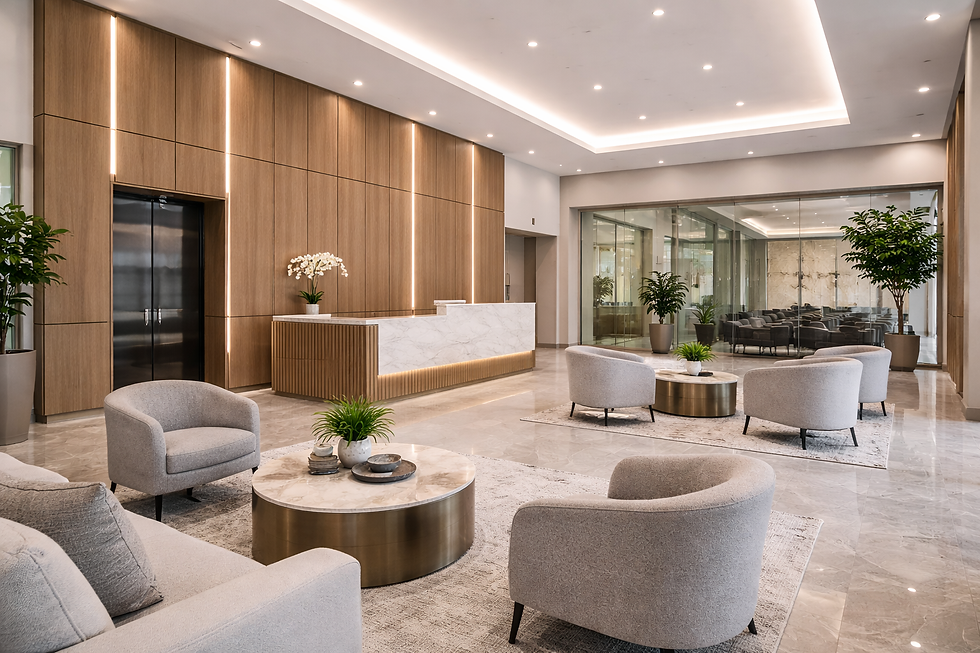
How Educated Interior Designers Transform Space: Beyond Inspiration Boards

Interior design is often associated with visual styling, color palettes, and curated furniture selections. While these elements contribute to the final aesthetic, educated interior designers operate at a much deeper level. Their work is grounded in spatial intelligence, architectural logic, material performance, and human-centered planning. The true transformation of a space is not defined by inspiration boards alone, but by a structured design methodology that translates lifestyle, function, and proportion into a built environment that performs consistently over time.
An educated interior designer does not simply assemble attractive components. They interpret a space as a system, evaluating its structure, movement patterns, lighting behavior, acoustics, and material interaction. This professional perspective turns design into an applied discipline rather than a decorative exercise.
If you are seeking a refined interior outcome grounded in spatial planning, material performance, and architectural logic, professional interior design services provide the structure required to achieve clarity and long-term value.

Spatial Planning as the Foundation of Transformation
The most significant design improvements often occur before finishes and furniture are even discussed. Educated interior designers begin by analyzing how a space functions. This includes circulation, spatial hierarchy, ergonomics, and the relationship between public and private zones. A living room, for example, is not simply arranged for visual appeal. It is composed to support movement, comfort, focal balance, and human interaction.
Spatial planning also addresses structural limitations and opportunities. Ceiling heights, window proportions, wall alignments, and doorway placement influence how a space is perceived. Designers trained in spatial theory understand how geometry and proportion impact the psychological experience of a room. Through subtle adjustments in layout and alignment, a space can feel larger, calmer, and more intentional without increasing its physical footprint.
Design decisions become more precise when materials, finishes, and proportions are evaluated in real scale. A showroom experience allows clients and professionals to view finishes under controlled lighting and make confident selections.

Lighting, Perception, and the Architectural Role of Atmosphere
Lighting is one of the most powerful tools in professional design, because it shapes how space is perceived. Educated interior designers approach lighting as a layered architectural strategy rather than a decorative accessory. Natural light behavior is studied based on window orientation, seasonal intensity, and reflective surfaces. Artificial lighting is then designed to support both function and atmosphere.
A well-designed interior includes ambient lighting for general comfort, task lighting for functional zones, and accent lighting that emphasizes architectural details. When lighting is planned professionally, surfaces appear richer, textures gain depth, and the room feels composed at every hour of the day. This is where design becomes experiential rather than visual, because the atmosphere influences mood and behavior as much as the furniture itself.
Wall surfaces shape the behavior, depth, and atmosphere of light. Premium wall panel systems allow designers to create texture, rhythm, and architectural continuity while maintaining durability and clean detailing.

Material Knowledge That Extends Beyond Aesthetics
Inspiration boards often highlight colors and trends, yet professional designers evaluate materials through performance, durability, maintenance, and compatibility. Flooring, wall finishes, panels, and tile selections influence acoustics, cleaning requirements, humidity response, and long-term aging. Educated interior designers understand the technical characteristics of materials and specify them according to real environmental conditions.
In climates such as Florida's, material performance is even more critical. Humidity, heat, and daily wear require finishes that remain stable while maintaining visual refinement. Premium wall panels, high-quality tiles, and engineered surfaces are selected not only to enhance beauty but to ensure longevity. A space designed with proper material logic retains its value and clarity over time.
Material selection defines both the visual identity and the performance of an interior. Premium tiles and finish systems deliver long-term durability while supporting refined architectural composition.

Technical Coordination and Construction Intelligence
One of the clearest differences between casual design and professional design is technical coordination. Educated interior designers understand construction systems, installation tolerances, and trade sequencing. They coordinate design decisions with contractors, fabricators, and suppliers to ensure the final result aligns with the intended concept.
This includes aligning wall panel grids with ceiling lines, ensuring cabinetry dimensions meet appliance requirements, verifying tile layouts to maintain symmetry, and coordinating lighting locations prior to installation. When design is executed through technical documentation and on-site understanding, the space achieves precision rather than approximation. This level of coordination is what transforms interiors into environments that feel resolved, architectural, and professionally finished.
Human-Centered Design and Psychological Comfort
Educated interior designers design for people, not only for photography. The most successful interiors support daily life with comfort, clarity, and emotional balance. This includes acoustic softness, ergonomic furniture selection, intuitive movement paths, and carefully controlled visual complexity.
Designers trained in environmental psychology understand how scale, color temperature, and material texture influence the human nervous system. A space can feel energizing or calming depending on its composition. When this is executed correctly, interiors become supportive environments that enhance lifestyle, productivity, and well-being.
Beyond Inspiration Boards: Design as a Structured Discipline
Inspiration boards remain useful as visual references, yet they represent only the surface layer of a professional design process. Educated interior designers translate inspiration into technical strategy. They integrate architectural planning, lighting engineering, material performance, and construction coordination into a cohesive outcome.
This is why professionally designed interiors feel effortless. The final space is not simply styled. It is engineered to perform well, age gracefully, and communicate its identity through architectural order.
Concluding Perspective
Educated interior designers transform spaces by applying expertise that extends far beyond visual inspiration. Through spatial planning, lighting strategy, material intelligence, technical coordination, and human-centered thinking, they create interiors that are refined, functional, and architecturally complete. Inspiration boards can guide a direction, but professional design turns that direction into a space that performs with clarity and long-term value.